What is hypothyroidism?
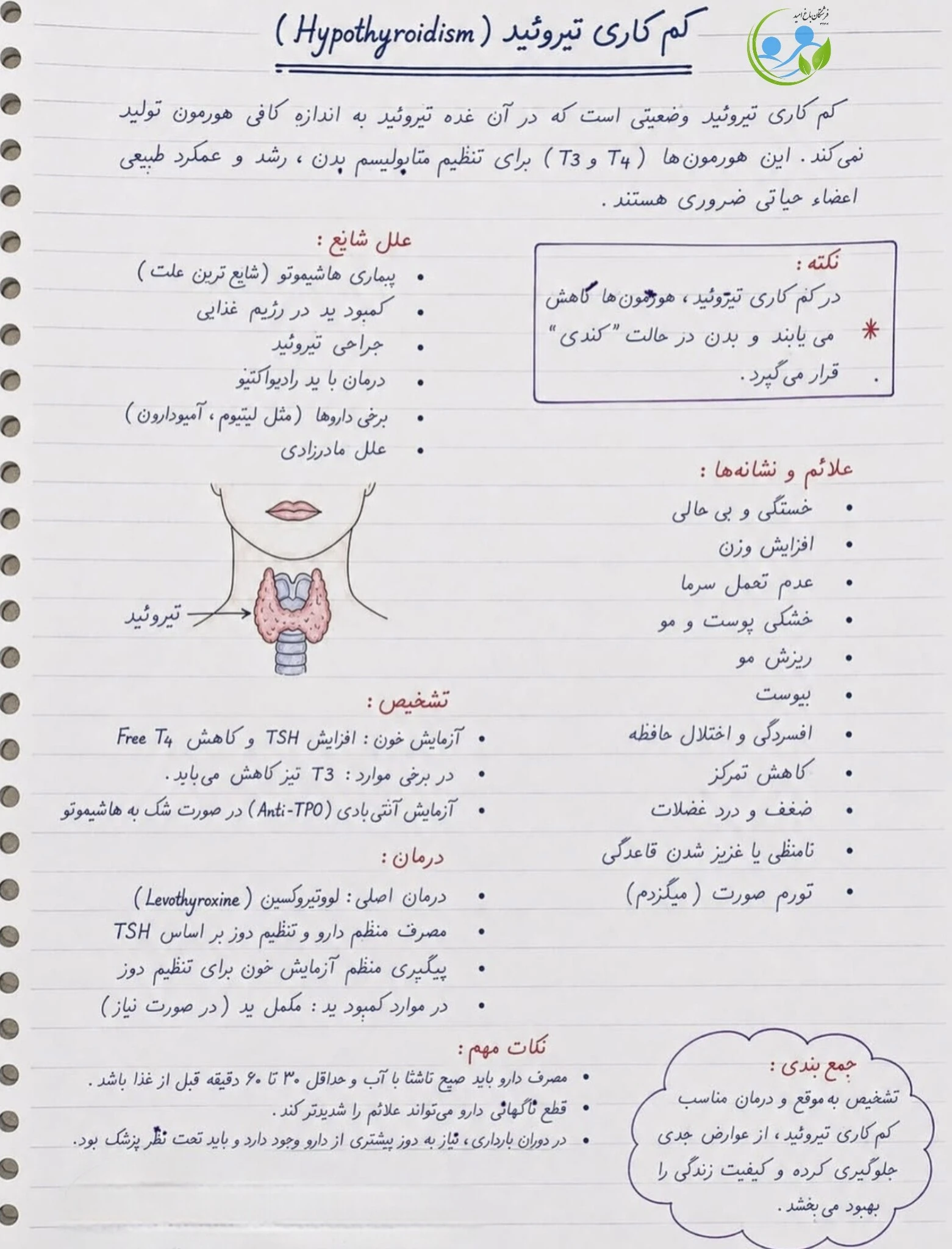
When the thyroid does not produce enough hormone, some body functions slow down. Tiredness, feeling cold, constipation, dry skin or weight gain may occur. These symptoms are not specific enough to establish a diagnosis.
Assessment and follow-up
A clinician reviews the history and blood tests such as TSH and T4. Treatment commonly involves hormone replacement and follow-up tests. Follow the prescribed dose and timing; do not start iodine supplements or change treatment independently.
Everyday support
Keep the medication list and next appointment accessible. Record new changes and report them to the clinician. A caregiver can remind the person about the prescribed plan; treatment decisions belong to the clinical team.
About the study note
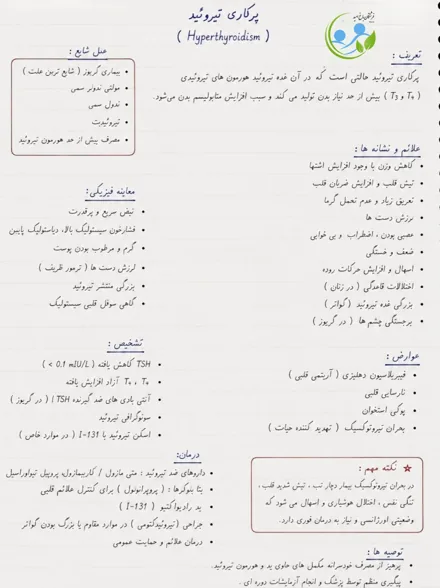
The supplied illustration is in Persian. Its medication notes are general study material, not an individual prescription.
Further reading
About this article
To report a content error, contact Bagh Omid and let us know. Editorial policy & sources